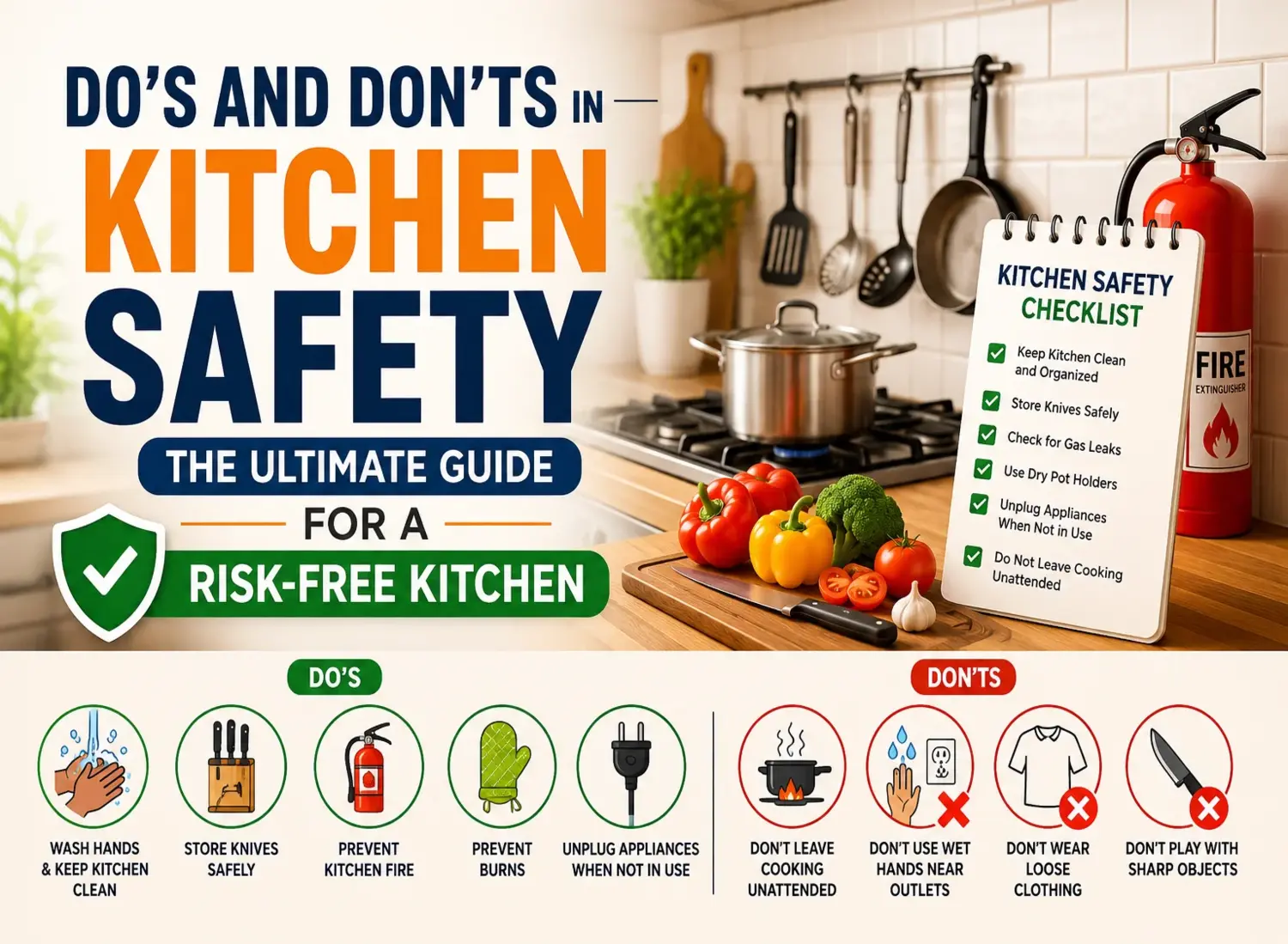
The kitchen is an integral part of every home and is also one of the most potentially dangerous areas. The do and don’ts for kitchen safety include keeping the kitchen clean, storing knives properly, using dry pot holders, checking for gas leaks, and unplugging appliances when not in use. Avoid leaving cooking unattended, using wet hands near outlets, or wearing loose clothing.
Following these safety rules helps prevent common kitchen hazards like burns, cuts, fires, electric shocks, and food contamination — ensuring a safer environment for everyone at home.
Keep reading to explore detailed kitchen safety tips that will help you create a safer and more accident-free cooking environment.
Kitchen Safety Rules Everyone Should Follow to Prevent Accidents
Kitchen safety includes maintaining cleanliness and hygiene, and proper handling of sharp objects, hot surfaces, or any electrical appliances. In addition, NFPA states that about 61% of restaurant fires are due to kitchen cooking. Cooking is the reason behind 44% of home fires, kitchen knives injure around 350,000 people and 160,000 children annually.Why Kitchen Safety Is Important
Kitchen safety is crucial during working in the kitchen whether you are cooking, cleaning, or daily living. Moreover, being aware of kitchen safety and taking care of all the food preparation and cleaning helps to keep you and your family safe from kitchen hazards, accidents, or food poisoning. If you want to know why kitchen safety is important, then many reasons include:-- Child and pet safety – There are always risks for children and pets from sharp objects in the kitchen. So, it’s essential to keep all the harmful substances and sharp things out of reach for their well-being.
- Food safety – The kitchen is more prone to food-borne diseases. So, proper handling, storage, or cooking of food helps to prevent the growth of bacteria, viruses, or other types of contaminants.
- Enhancing well-being – A safe kitchen helps to get peace of mind, and confidence, and enjoy the cooking and dining in the home kitchen.
- Prevent accidents – Kitchen safety helps to prevent accidents that include burns, cuts, slips, or falls.
Do’s and Don’ts For Kitchen Safety
Looking at the frequent hazards in the kitchen, there is a need to follow the kitchen safety rules helping you and your family from burns, cuts, slips, or any food poisoning. Moreover, following kitchen safety rules and guidelines ensures that there are no dangers causing harm and that it is safe in the kitchen. Thus, there are a few do’s and don’ts that help you to understand what to do and what to avoid to ensure a proper kitchen environment.Do’s
There are some things you must keep in mind and practice regularly to keep your kitchen safe. It includes:-- Wash hands and keep the kitchen clean – Cleanliness is important to make your kitchen free from all microorganisms. Wash your hands before touching food. Moreover, clean the kitchen and keep it organized. Use different chopping boards for different categories of food items.
- Store knives safely – Use and store knives safely to avoid any cuts. Store knives out of reach of children. Carry knives always pointing down and never try to catch falling knives from the pointed side.
- Prevent kitchen fire – keep all the flammable items or materials away from the gas stove or cooking area. If possible, keep a handy fire extinguisher in the kitchen for any emergency.
- Prevent burns – use oven mitts when you are touching hot surfaces. Moreover, use dry pot holders and always keep the pot handles at the back of your stove.
- Prevent electrical shocks or hazards – Unplug all the electrical appliances when not in use and avoid overloading of electrical outlets.
- Organize food carefully – organize your food by dividing the refrigerator into different areas, preventing cross-contamination.
- Gas – Regularly check the leaks before starting your stove. If there is a minor leak then keep your doors and windows open.
Don’ts
Carelessness can lead to accidents or hazards in the kitchen. So, it’s important to avoid or not do a few things to keep everyone safe and healthy. It includes:-- Cooking – Don’t leave cooking unattended at high temperatures.
- Avoid burns – Don’t open any pan lids in your direction and let people know when you are carrying some hot food. Do not throw water on any kitchen fire as it may increase the first if it’s greasy.
- Do not play with sharp objects – Do not play with any sharp objects, throw them at someone or try to catch a falling knife.
- Clothes – Do not wear loose clothes as they may catch fire. Instead, wear aprons and tight tight-fitting dress.
- Avoid shock – Do not use wet hands or do not spread water near electrical outlets.
Expert Opinions For Kitchen Safety
Essential Kitchen Safety Rules For Everyone
It’s important to follow basic kitchen safety rules to prepare food safely and soundly. Moreover, there are multiple hazards we may encounter if we do not follow the rules properly. However, the safety rules for kitchen tips may sound very common, but it’s essential to avoid accidents. The rules are:-- Safe food storage and preparation – Cooking food thoroughly is essential to eradicate harmful bacteria and maintain food safety. Moreover, it is important to store food at an optimum temperature to prevent contamination and food spoilage avoiding food-borne illness. In addition, check for expiration dates and store food in airtight containers. Regularly check your inventories preventing any spoilage.
- Hygiene practices– To keep food safe, the most important rule is to wash your hands regularly to reduce cross-contamination. Moreover, use different chopping boards for vegetables, or meat to avoid cross-contamination. In addition, sanitize the food preparation counters and kitchen floor reducing the growth of microbes.
- Fire prevention strategies – Fire is a common hazard in the kitchen. So, you should take preventive measures to control different types of fire such as grease and electric fires. Use a fire extinguisher or install smoke detectors to prevent hazards in the kitchen.
- Handle hot dishes and equipment – Handle carefully hot dishes, and use oven mitts to touch the hot utensils. Moreover, handle electrical appliances properly storing them in dry places. Do not spread water near appliances or touch it with wet hands.
- Proper handling of kitchen tools – kitchen knives should be always sharp as dull knives slip causing injuries. Never use forks as a tool to retrieve food from plugged toasters. In addition, keep knives, graters, and all sharp objects in a safe place.
Kitchen Safety For Kids And Pets
The kitchen consists of different products, utensils, sharp objects, and appliances that could be dangerous to kids. So, there is a great need to ensure kitchen safety for kids. To make your kitchen safe for kids, you need to take the following measures to childproof your kitchen:-- Store knives, graters, forks, or sharp objects out of the children’s reach.
- All the electrical outlets should be covered with safety plates or even with plastics.
- Install safely lock with childproof clips for all the drawers and cabinets in the kitchen which is within the child’s reach.
- Install corner guards for countertops and tables to save children from pointed edges.
- Use stove burner knob covers and foam door stoppers to keep your child safe.
- Keep cleaning chemicals and supplies beyond the kid’s reach.
- Pets are more likely to ingest the cleaning supplies. So, keep them inside the cabinet or out of reach from your pets.
- Clean the spills or food crumbs on the ground as soon they fall so that your pet does not eat.
- Keep the food items which are toxic to pets out of their reach.
- Keep trash cans inaccessible to your pets.
First Aid And Emergency Protocols In The Kitchen
The kitchen is a common place for any accidents or kitchen hazards. So, you must know how to react promptly. Moreover, here are a few first aid and emergency protocols in the kitchen that everyone should practically know. It includes:-- Cuts – When there is a cut, then first wash the cut with soap and water. Then, apply pressure with a clean cloth or sanitized bandage for a few minutes and put another one above that. In addition, if bleeding continues, contact medical assistance.
- Burns – Put clean and cold water over the burn area for 3-5 minutes and then remove all the jewellery or clothes in that surrounding area. Put antibiotic ointment and cover it with film protecting it from infection and irritation.
- Eye injuries – To deal with eye injuries, lean over the sink and put lukewarm water over your eye for approximately 15 minutes. Moreover, protect the eye by covering it.
- Irritants – If any part of your skin is irritating, then wash the area with lukewarm water. You may also put milk or hot pepper on the skin.
- Fire – In case of fire, there are a few things you need to do.
- Call emergency services 112.
- Evacuate the kitchen and area.
- Use a fire extinguisher to control small fires. You need to pull the pin, aim the nozzle pointing at the base of the fire, squeeze the lever slowly, and sweep the nozzle side to side.
Kitchen Safety Checklist
There are some kitchen safety rules and checklists:-- Regularly follow all the guidelines of food safety, properly wash, sanitize, and store the food.
- Dispose of the waste regularly and clean the bins to prevent contamination and pests.
- Install a fire extinguisher in your kitchen and learn the guidelines to use it.
- Regularly clean and sanitize the countertop, cooking, and prepping area.
- Use cloths or mitts to avoid burns from hot utensils.
- Know how to deal with emergencies and give first aid.
- Clean equipment and use it safely.
Conclusion
Kitchen safety is necessary for every member of the household and everyone together needs to make the kitchen a safe space. It includes:-- Store sharp objects safely to prevent any injuries. Prevent burn by using a dry potholder and do not leave cooking unattended.
- Handle the appliances in the kitchen preventing any hazards or shock.
- Make your family members aware and confident in kitchen safety.
- Wash your hands, surfaces, and objects regularly.
- Follow the food safety rules and guidelines.
- Be prepared for any kitchen emergencies.