Commercial induction vs LPG is first a question of running cost. Which fuel puts the same heat into a pot for fewer rupees? On Delhi prices from November 2026, induction costs less than half as much per hour. The reason is simple: it wastes far less heat. This guide shows the working and the equipment bill. It covers a big hotel kitchen and a small momo thela. It also lists the dishes that should stay on gas.
LPG burner
₹81 per hourIt burns 0.55 kg of LPG for 2.8 kWh of useful heat. This uses ₹2,820 per 19 kg cylinder and 40% burner efficiency.
Induction hob
₹39 per hourIt uses 3.5 units of electricity for the same 2.8 kWh of useful heat. This uses ₹11 a unit and 80% efficiency.
Both figures assume one 3.5 kW hob at full power for one hour. Prices: IOCL Delhi cylinder rate, 1 Nov 2026; DERC non-domestic tariff, Jul 2026.
What is commercial induction, and how is it different from an LPG burner?
Commercial induction is a way of cooking with a magnet. A copper coil sits under a glass top. It makes a magnetic field that heats a steel pan directly. An LPG burner heats the air and the pan bottom with an open flame. So most of its heat escapes around the pot and into the kitchen.
Efficiency means the share of energy that actually reaches the food. Tests show a big gap here. Commercial induction puts about 77–90% of its energy into the pan. Open gas burners put in about 35–40% (EPRI for the California Energy Commission, 2014; US Department of Energy figures). EPRI is the Electric Power Research Institute, a US research body. ENERGY STAR, the US energy label, certifies an electric hob only at 80% or more.
Induction also stops heating the moment the pan is lifted. The US Environmental Protection Agency (EPA) notes that it puts less waste heat into the room. That means the kitchen exhaust has less work to do. In a 100-cover hotel kitchen, that cooler air matters for staff. On a chaat thela in Indore, it means a cooler stall in May.
Both fuels sit inside the wider range of commercial cooking equipment. Most Indian kitchens end up using some of each.
How much does one hour of cooking cost with commercial induction vs LPG?
One hour on a 3.5 kW induction hob costs about ₹38.50 in Delhi. The same heat on LPG costs about ₹81. Here kW (kilowatt) means how fast a machine uses power. A 3.5 kW hob running for one hour uses 3.5 kWh. One kWh is the same as one “unit” on your bijli bill.
The working starts from the energy inside the gas. One kilogram of LPG holds about 12.8 kWh (about 46 MJ, or megajoules, another energy unit). At ₹2,820 per 19 kg cylinder, gas costs ₹148 per kg. That is ₹11.60 per kWh of gas.
But a burner wastes 60% of that heat. So the real price is about ₹29 per useful kWh. Electricity at ₹11 a unit costs far less through an 80% efficient hob. The table puts one full-power hour side by side.
| Item | LPG burner | Induction hob |
|---|---|---|
| Fuel price | ₹148/kg | ₹11/unit |
| Efficiency assumed | 40% | 80% |
| Energy bought | 7 kWh (0.55 kg) | 3.5 units |
| Cost per hour | ≈₹81 | ₹38.50 |
How does the gap change when cylinder or electricity prices move?
Induction stayed cheaper at every price seen in 2026. A full-power hour on LPG cost ₹72 at a ₹2,500 cylinder. It cost ₹144 at the ₹5,000 black-market price reported in March 2026. Induction cost ₹32 at ₹9 a unit and ₹53 at ₹15 a unit.
The ₹11 figure comes from the Delhi Electricity Regulatory Commission (DERC), which sets Delhi’s power prices. Its base rate is ₹8.50 per kVAh. A kVAh is close to one unit; it is how commercial meters bill. On top come an 8% deficit surcharge and a 5% pension surcharge. A 12–18% fuel and power purchase surcharge is also added (DERC order, Jul 2026).
Electricity duty, a state tax, comes on top again. That is why real Delhi bills often land at ₹12–13 a unit. In Karnataka, the commercial rate is ₹7.10 a unit plus ₹235 per kW fixed (KERC, the Karnataka regulator, Mar 2026). Rates in Indore, Lucknow and other cities differ. Check your own bijli bill or your state’s commercial rate.
| 19 kg cylinder | Cost |
|---|---|
| ₹2,500 | ₹72 |
| ₹2,820 | ₹81 |
| ₹3,113.50 | ₹90 |
| ₹5,000 | ₹144 |
| Rate per unit | Cost |
|---|---|
| ₹9 | ₹32 |
| ₹11 | ₹39 |
| ₹13 | ₹46 |
| ₹15 | ₹53 |
What does a month of cooking cost for a 30-seat restaurant?
Take an illustrative 30-seat Delhi restaurant. It runs four burners for six hours a day, 30 days a month. Induction saves it about ₹27,000 a month after fixed charges. That kitchen logs 720 burner-hours a month. On LPG it would burn 394 kg, roughly 21 commercial cylinders, costing ₹58,441.
On induction the same cooking takes 2,520 units, or ₹27,720. The kitchen also needs about 15 kVA of extra connected load. kVA is the power your connection is allowed to draw. At ₹250 per kVA, that adds a fixed charge of ₹3,750 a month. The total is ₹31,470.
So the saving is about ₹30,721 on fuel alone. It is about ₹27,000 once the fixed charge is counted. These are worked figures, not a client record.
| Cost line | LPG | Induction |
|---|---|---|
| Fuel used | 394 kg | 2,520 units |
| Fuel cost | ₹58,441 | ₹27,720 |
| Fixed charge, ~15 kVA | nil | ₹3,750 |
| Monthly total | ₹58,441 | ₹31,470 |
A small cloud kitchen in Lucknow on Swiggy and Zomato may run just one or two burners. Put your own numbers in the calculator. Change the cylinder price, your tariff and your hours.
Monthly fuel cost calculator
Assumes 3.5 kW per burner, LPG at 40% and induction at 80% efficiency, 30 days a month.
About 21 commercial cylinders a month replaced. Fixed charges for the extra electrical load are not included.
Why did Indian restaurants start comparing induction and LPG in 2026?
Restaurants began moving cooking to induction in March 2026. The West Asia conflict cut LPG shipping through the Strait of Hormuz. Commercial cylinders ran short. India imports about 62% of its LPG (Business Today, Mar 2026). So supply and price both moved fast.
- 28 Feb 2026Conflict in West Asia disrupts LPG shipping through the Strait of Hormuz.
- 5–7 Mar 2026The petroleum ministry puts home LPG first. The National Restaurant Association of India (NRAI) writes to the minister on 7 March.
- Mid-Mar 2026Delhi caps commercial cylinders at 20% of normal, about 1,800 a day. Restaurants get 42% of that. Black-market cylinders sell above ₹5,000 (The Week, Mar 2026).
- 1 May 2026The 19 kg commercial cylinder rises ₹993 overnight to ₹3,071.50 in Delhi. It peaks at ₹3,113.50 in June.
- 25 Jun 2026The ministry lifts all curbs on packed commercial LPG (ThePrint/PTI).
- 1 Nov 2026Indian Oil (IOCL) rates: Delhi ₹2,820, Mumbai ₹2,775, Kolkata ₹2,971, Chennai ₹2,994.50.
Piped natural gas (PNG) comes through a pipeline, not a cylinder. Kitchens on PNG were largely unaffected, according to NRAI in March 2026. Tamil Nadu gave eateries ₹2 a unit back on extra electricity used after moving to electric stoves. Some chains shifted about 60% of their cooking to induction. Induction cooktop sales in cities rose sharply (ThePrint, The Week, Mar 2026).
What does commercial induction equipment cost compared with gas?
Commercial induction equipment costs 4 to 8 times as much as similar gas equipment. A two-burner induction range lists at about ₹1.17 lakh. A two-burner LPG range lists at ₹13,500–₹30,000 (IndiaMART and dealer listings, Nov 2026). GST, the goods and services tax, may or may not be included in a listing.
| Equipment | Rating | Listed price |
|---|---|---|
| Single induction hob | 3.5–5 kW | ₹12,500–₹42,000 |
| Induction wok hob | 3.5 kW | ~₹32,000 |
| Induction wok or multi-zone range | 8–10 kW | ₹1.2–1.85 lakh |
| Two-burner induction range | Two zones | ~₹1.17 lakh |
| Induction bulk cooker, 100–200 L | 10–24 kW | ₹1–3.75 lakh |
| Induction fryer, 16 L | 10 kW | ~₹96,000 |
Indian makers price a 3.5 kW single hob at ₹19,000–24,000. Imported units list near ₹42,000. The budget ladder below groups these prices by size of business. It runs from a Starter stall to a full hotel kitchen.
| Level | What you get | Listed price |
|---|---|---|
| Starter: street stall, thela or small cloud kitchen | One 3.5 kW induction hob (Indian makers ₹19,000–24,000), or a two-burner LPG range at ₹13,500–₹30,000 | ₹12,500–₹42,000 |
| Small restaurant or dhaba | Two-burner induction range (~₹1.17 lakh), an induction wok hob (~₹32,000) or a 16 L induction fryer (~₹96,000) | ₹32,000–₹1.17 lakh per unit |
| Full commercial kitchen | 8–10 kW wok or multi-zone ranges (₹1.2–1.85 lakh) and 100–200 L bulk cookers (₹1–3.75 lakh), plus wiring and load upgrade | ₹1–3.75 lakh per unit |
For a big kitchen, the illustrative saving of about ₹27,000 a month pays back the extra spend over time. But first add the wiring and load upgrade covered below. Owners pricing a new outlet can compare these figures with a full cloud kitchen setup cost breakdown.
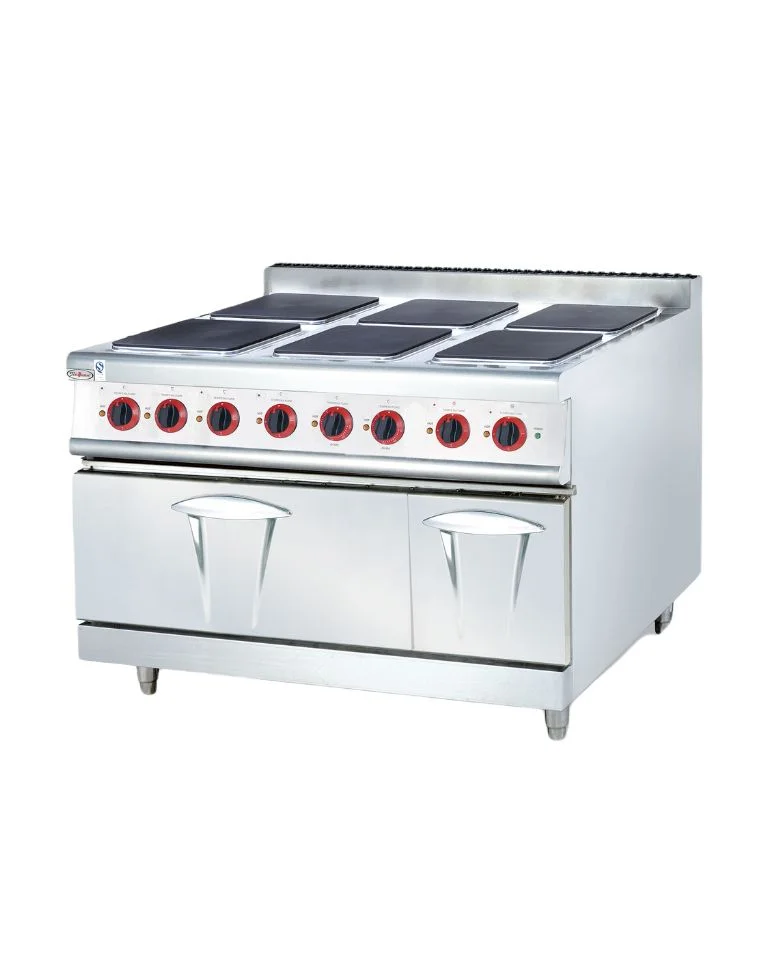
Hadala 6-zone electric induction hot plate
Six 3.5 kW cooking zones on a 304 stainless steel body. It measures 1200 × 900 × 940 mm and has a digital controller. It suits gravies, dal and boiling on a busy line.
View specificationsWhich kitchen stations should move to induction, and which should stay on gas?
Gravies, dal, rice, boiling, deep frying and tawa work move well to induction or electric equipment. High-flame wok tossing, tandoor and phulka are still best on gas. Owners who switched in March 2026 found two problems. Large-pot gravies were slow on small induction units. Wok dishes lost their smoky flavour (ThePrint, The Week, Mar 2026).
Gravies and dal
Long simmers suit steady induction heat. Use a hob sized for large pots, since small units were slow in 2026.
Rice and boiling
Bulk boiling gains most from the efficiency gap. Induction bulk cookers hold 100–200 litres.
Deep frying
An electric fryer holds the oil at one temperature. That keeps every batch the same.
Tawa and dosa
Flat electric hot plates handle tawa and dosa work without an open flame.
Wok tossing
A Chinese wok burner gives the high flame and smoky flavour induction cannot match.
Tandoor and phulka
Direct flame is part of the dish, so these stay on gas. Keep a gas burner range for backup too.
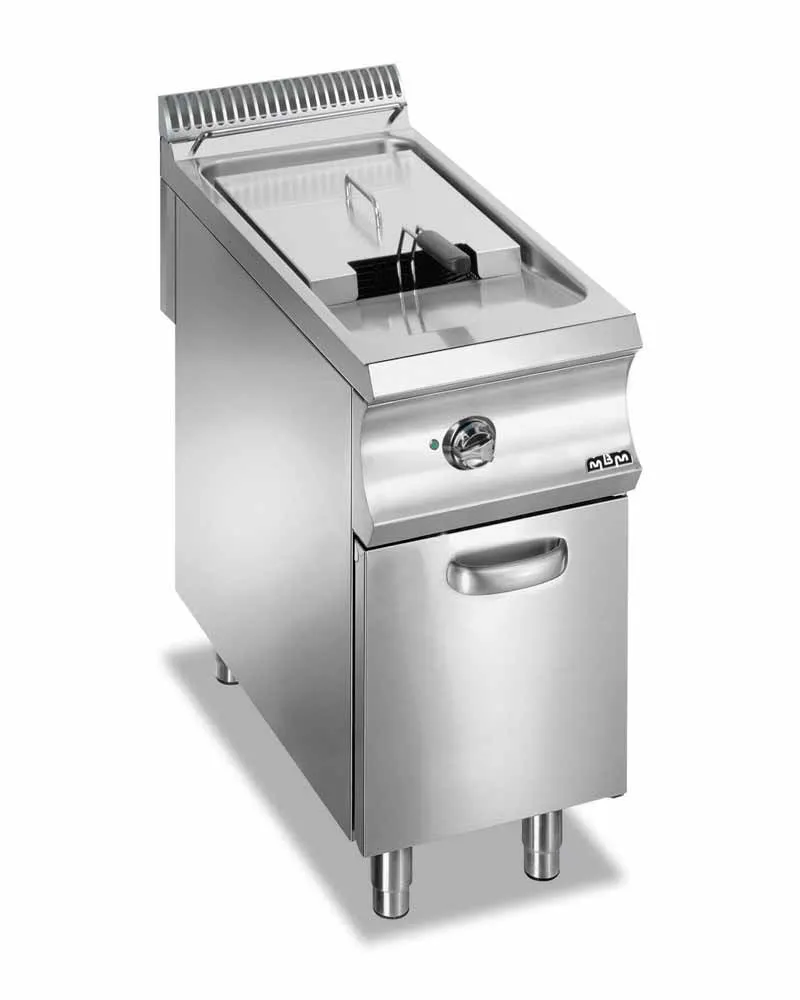
A chaat or samosa stall that mostly fries can move its kadhai work to an electric fryer. A momo stall that steams can boil water on one induction hob. A kitchen built around Indo-Chinese food will keep more gas than a dal-and-rice kitchen. The guide on opening a Chinese restaurant in India covers that layout.
What hidden costs come with switching from LPG to induction?
Induction has four main hidden costs. They are magnetic cookware, wiring and a higher sanctioned load, voltage protection, and backup for power cuts. Sanctioned load is the most power your bijli company lets your connection draw. None of these costs show in the per-hour comparison. So budget for them before ordering hobs.
- Magnetic cookware: aluminium kadhai and handi will not work. If a magnet sticks to the base, the pan will heat.
- Wiring and sanctioned load: take a kitchen that draws 15–20 kW today. It could need 4–5 times that load to go fully electric (iamrenew, Apr 2026).
- Stabiliser and surge protection: voltage spikes are the commonest cause of failure in induction units. They damage the IGBT, the main power switch inside the hob, and other electronics.
- Backup for power cuts: keep at least one gas burner or a backup power plan. Then service does not stop.
A big hotel kitchen will need an electrician and a load upgrade. A small cloud kitchen with one or two hobs should still ask an electrician to check the load first. Maintenance is simple but strict. Wipe the glass only once it is cool. Keep the fan intake and filter clear, because a blocked fan causes overheating error codes. The kitchen equipment maintenance guide lists daily checks.
What are the pros and cons of induction against LPG?
Induction wins on running cost, efficiency, kitchen heat and fuel security. LPG wins on equipment price, flame-led dishes and working without the power grid.
Induction
- About ₹39 an hour against ₹81 on LPG.
- 77–90% efficient, against 35–40% for open burners.
- Less waste heat and less work for the exhaust.
- No cylinder shortages or storage licence.
LPG
- Cooking cost about twice induction per hour.
- Exposed to shortages, as in March 2026.
- More waste heat in the kitchen.
- Licence needed above 100 kg stored.
LPG still has clear advantages. Its equipment costs 4 to 8 times less. It works through power cuts. Wok, tandoor and phulka need its flame. Under the Gas Cylinders Rules 2016, storing more than 100 kg of LPG needs a licence. That is about five 19 kg cylinders. The food licences and regulations guide covers the other permits a kitchen needs.
How should a restaurant plan the move from LPG to induction?
Move in stages. Start with the stations that save the most and need the fewest recipe changes. A mixed kitchen keeps service running while staff learn the new equipment. A small stall can start with one induction hob next to its gas burner.
- Log your burner-hoursCount how many burners run and for how long. Note how many cylinders you buy each month.
- Check your electrical supplyAsk an electrician to check the sanctioned load, phase and wiring before buying any hob.
- Move gravies, rice and frying firstThese stations gain most from induction and electric equipment. They need the fewest recipe changes.
- Keep gas for flame dishesKeep wok, tandoor and phulka on gas, plus one burner as power-cut backup.
- Replace cookware and add protectionSwitch to magnetic pans. Fit a stabiliser and surge protection on every induction circuit.
What do restaurant owners ask about induction vs LPG?
Is commercial induction cheaper than LPG in India?
Yes, on running cost. On Delhi prices from November 2026, an hour on a 3.5 kW induction hob costs about ₹39. The same hour on LPG costs about ₹81. Induction stays cheaper unless electricity costs more than about ₹23 a unit.
How much LPG does one commercial burner use in an hour?
A 3.5 kW induction hob gives 2.8 kWh of useful heat in an hour. Giving the same heat takes about 0.55 kg of LPG at 40% burner efficiency. At ₹2,820 per 19 kg cylinder, that is about ₹81 an hour.
Do I need three-phase power for commercial induction?
Often, yes. A 5 kW induction wok often needs three-phase supply. In Delhi, a connected load above 10 kW is generally supplied three-phase at 400–415 V. Check your sanctioned load before you buy.
Can I use my aluminium kadhai on an induction hob?
No. Induction only heats magnetic cookware, so aluminium kadhai and handi will not work. Hold a magnet to the base. If it sticks, the pan will work on induction.
Should a restaurant move all its cooking to induction?
Usually not. Gravies, dal, rice, boiling, frying and tawa work move well. High-flame wok cooking, tandoor and phulka are still best on gas. In March 2026, some chains moved about 60% of their cooking to induction, not all of it.
What is the monthly saving from switching to induction?
Take an illustrative 30-seat restaurant running four burners for six hours a day. Fuel drops from ₹58,441 on LPG to ₹31,470 on induction, with the fixed charge. That saves about ₹27,000 a month. A thela running one hob for 4 hours a day saves about ₹5,100 a month (illustrative). Your figure depends on your hours and tariff.